Building in Winter, Can I Really?
Building Modular Homes in Winter: A Season-Proof Solution
When most people think about home construction, they picture clear skies, dry ground, and crews working in the warmth of spring or summer. Traditional building methods often slow down—or even halt—during winter due to cold temperatures, snow, and frozen ground. But modular construction changes the game. Because of its factory-based process and streamlined installation, modular homes can be built efficiently, even in the middle of winter.
The Advantage of Indoor Construction
The biggest reason modular homes can be built in winter lies in their off-site production. Modules are fabricated in climate-controlled factories, shielded from snow, ice, and freezing winds. This means:
- No weather delays – Work continues regardless of outside conditions.
- Protected materials – Lumber, insulation, and finishes aren’t exposed to moisture or warping.
- Steady labor schedules – Crews work indoors without the seasonal interruptions that affect traditional job sites.
By the time the modules are ready, much of the construction work is already complete.
Preparing the Site in Cold Weather
Even though the home itself is built indoors, the foundation and site still need to be prepared outdoors. Winter construction requires planning for:
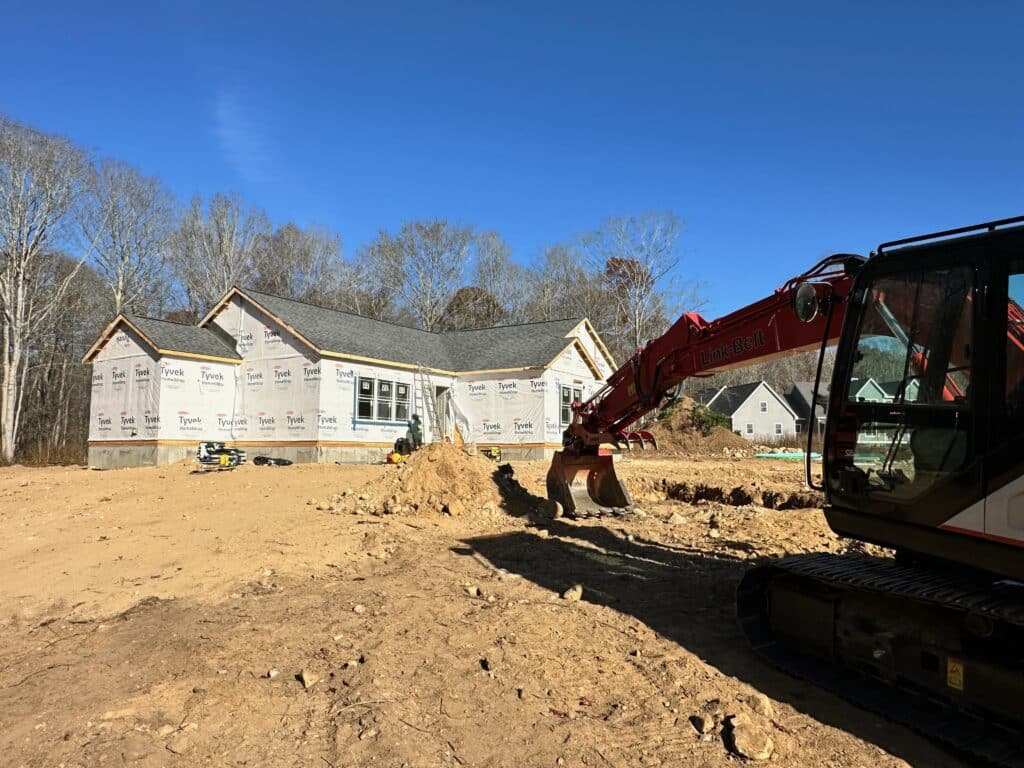
- Frozen ground – Excavators are able to break ground so long as frost hasn’t penetrated the ground more than 18″ deep. This depth of frost is generally only brought on by an unusually long “polar vortex.” For the overwhelming majority of the winter, the ground is workable.
- Foundation – Since SNEML only uses Superior Walls foundations, which are manufactured in a climate-controlled facility, concrete additives and the need for curing are non-applicable.
- Snow management – Clearing snow and ice ensures safe and precise installation of modules.
With proper planning, these challenges are manageable and rarely cause delays.
Faster Installation and Less Exposure
Setting a modular home typically takes just a day or two, with cranes lifting the sections into place. The “set crew” will button-up the home and make watertight before set day is over.
Because installation is so fast, the building is quickly enclosed, keeping interior spaces dry. This drastically reduces the risk of weather damage compared to stick-built homes, which can sit exposed for weeks or months.
Benefits of Winter Modular Construction
Choosing to build a modular home in winter offers several unique benefits:
- Shorter timelines – Homeowners avoid waiting until spring to begin construction.
- Potential cost savings – Contractors may have more availability and competitive rates in the off-season.
- Earlier move-in – Families can enjoy their new homes by spring instead of just breaking ground.
Conclusion
Winter is no longer a “lost season” for new home construction. Modular building techniques allow homes to be fabricated indoors, installed quickly, and protected from the elements. With proper site preparation and efficient installation, modular homes can be built year-round—even when snow is on the ground.
For homeowners eager to move forward without waiting for warmer weather, modular homes offer a practical and reliable solution.
Related Posts
ADU Deployment in CT – Barriers & Challenges to Overcome
Understanding what’s holding back accessory dwelling units — and how to move forward. Accessory dwelling units (ADUs) — often referred